
Why Lagos Dredging and Sand Supply Market is still in doldrums
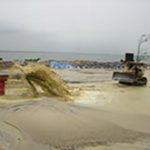
The Lagos dredging market which was the place to be just a few years ago is fast turning into a mirage. With the imminent solving of the Niger Delta security impasse and the huge jobs available there, the Lagos market is bound to take a second place in terms of the source of sand. Again, with another intelligence making the rounds whereby operators are devising ingenious ways of supplying the huge Lagos market from outside the state, the government officials who preyed on operators and made life hard for them will be left with pristine environment (if they are really sure environment was at the root of their grudge) while all the supply market will have moved to neighbouring locales.
From an analyst’s point of view, what was the matter with the Lagos market? It started first as a move by government officials to check excessive or unauthorized dredging activities. Ajah Badoreh dredging axis suffered the first clampdown in this connection in early 2008. Subsequently, no further dredging permits were approved for any dredging outfit on this axis and later that year, all the land bordering the road where stockpiles used to stand were annexed by the state government and their former certificates of ownership revoked by the Lagos State Government. The reason given in the newspaper notice which publicized this said that a road dualisation project was going to take place there.
This affected the price of sand and, as at early October, its availability. In the Lekki areas as at time of this writing, no sharp sand from mechanized dredgers is available, only sharp sand from dug-out canoe. This sells at N50,000.00 for 20 tons. The other sand available sand that buyers have resorted to is red sand sourced from surface mining operations which is not under clamp down yet. Red sand sells at N6,000.00 for 20 tons and these price levels are their highest in living memory for this area.
No Clear Procedures…
And for most dredging activity, especially sand stockpile, there is still no free hand yet, and no sure laid down rules anymore for any operator to go to bank with. Before now, once an operator conducted sand search report and complied with EIA report, bathymetric surveys and the like, and complied with registrations and fees payable to some government agencies, there was a predictable chance that the planned dredging activity would soon commence. But now, even big dredging companies are on queue and seem to be now tired of the waiting game that has become the lot of all who want to dredge in the Lagos area for various projects. The lynchpin now is the almighty EIA which ought to be an objective reporting of environmental conditions and situations on the ground of the project. The Lagos Ministry of Environment has made a resurgence in the retinue of agencies that must exercise preponderance over dredging applications in the state. In fact, once an EIA is approved by this ministry now, the holder is considered home and dry and can prepare to mobilize to site. However, the Waterfront Ministry still must be taken into consideration as a formality: the EIA approval is usually taken to this ministry for endorsement. But this presupposes that all other documentations have been met.
Since the last time when the selling of dredgers’ sand stockpile was the vogue around the state a lot of water seems to have gone under the bridge. Glossands, the company with the biggest sand stockpile which was pounced upon and sold for many months by the state government officials has now been given a permit to resume sand stockpiling at the same site. It was estimated that hundreds of millions of Naira was sold off at this site while the clampdown lasted, monies DDH gathered the state government has promised to pay back. A few other dredging outfits have also been favoured with temporary permits to stockpile sand around the state. But the notions making the rounds earlier that Lagos State Government preferred to license only seven major dredging companies to be in charge of sand dredging does not seem likely to materialise. The seven companies were said to be Van Oord, Julius Berger, B & Q Dredging and Westminster Dredging. Others were Rio Mark, Atlas Cove Dredging and Giorgio Dredging. When this news was making the rounds around July 2009, their representatives were constantly holding meetings at Alausa with government regulatory agencies but later momentum seemed to have fizzled out of the plan despite the widely held belief that prominent indigenes of the state were using the new approach to muscle their way into dominant positions in the sand supply and general dredging business in the state.
A top staff of one of the alleged favoured companies revealed to the magazine in early October that all their hopes to do business in the state were being frustrated by the non-release of the permits which they applied for. When asked the reason for this non-release, the source decried the utter confusion that seemed to bedevil the process in the state, stating that all the talk of approving the seven select dredging firms was now nothing more than a lot of hot air. They have since relocated operations to Port Harcourt.
Meanwhile the inter-agency bickering between some federal regulatory bodies like NIWA and MMSD and the Lagos State Government agencies like Ministry of Waterfront, LASWA and LASEPA continue unresolved. In August, a bold move by the zonal coordinator of the MMSD operating from Ibadan against operatives of the Lagos State Government selling sand at a stockpile in Ikorodu resulted in a showdown where the state government operatives were allegedly arrested by security operatives at the command of the zonal coordinator. Thereafter the forced sale of sand by the state government at Ikorodu was temporarily halted and the magazine learnt that the state enforcement team moved to Awoyaya axis in Lekki and began selling sand there as well. The haphazard mode of pouncing on sand stockpiles and selling them off has cast a pall on demoralized operators who were hoping that an end was coming to the era of arbitrary penalties for alleged infraction of dredging or sand mining laws in the state.
The quandary of dredging firms in the state also demonstrates the collateral damages that can result when politics finds its way into the marketplace. The federal agencies that licensed dredging companies in Lagos seem as helplessness as the victims of this legal tango between the two tiers of government. The silence is deafening. Worse still, it depletes the pocket.